Eurasian Collared-Dove
Streptopelia decaocto
Pale, collared, and the calmest thing at the feeder.
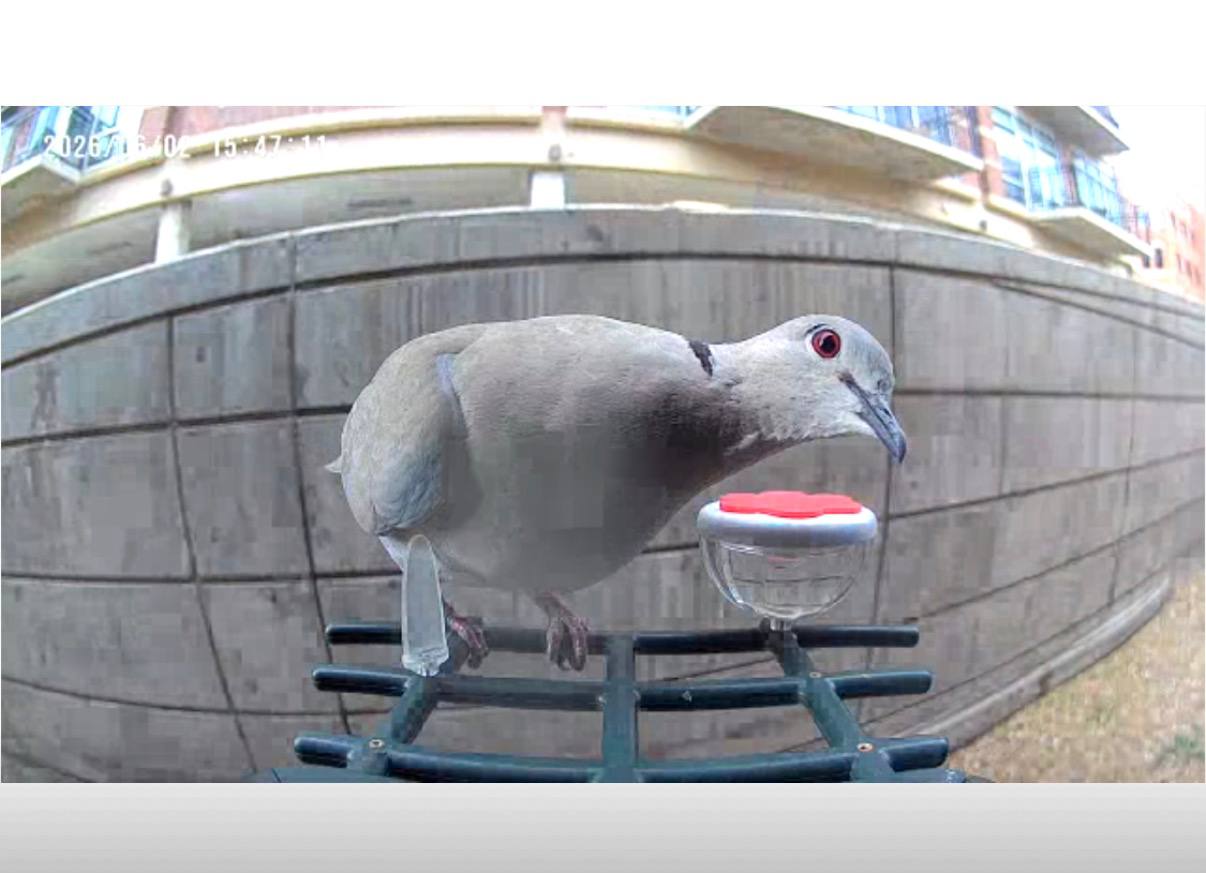
Pale gray-tan, with a thin black half-collar on the back of the neck and a square tail crossed by a broad white band underneath — those are the everyday tells. A dark ruby eye seals it up close. Bigger and paler than a mourning dove, and no wing-spots.
Their Latin name decaocto means 'eighteen' in Greek — from a folk tale about a servant girl paid just eighteen coins a year, turned into a dove that forever coos the sad number; their three-note coo really does sound like a little count. When food stays steady they'll raise brood after brood right through the warm months. (Rita's feeder 'couple'? A closer look says they're both this same species — so she had this bird pinned cold.) They reached North America the accidental way: escapees from a Bahamas pet shop in the 1970s, spreading across the continent faster than almost any bird on record.
Not a native — this one escaped a pet shop in the Bahamas in the 1970s and spread across North America faster than almost any bird on record.
-
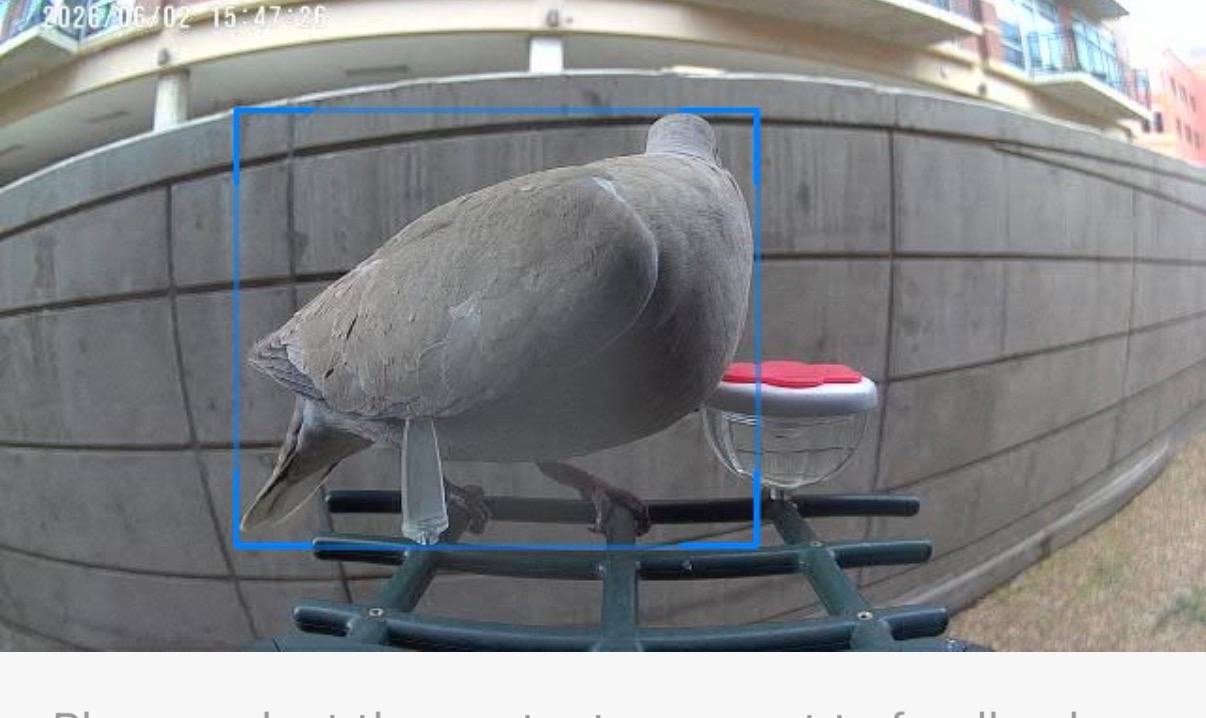
Jun 2, 2026
Double-confirmed with a clean side profile and the undertail shot.
-
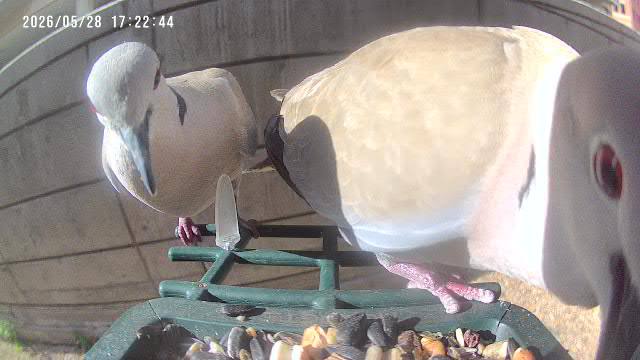
May 28, 2026
A pair at the feeder.
-
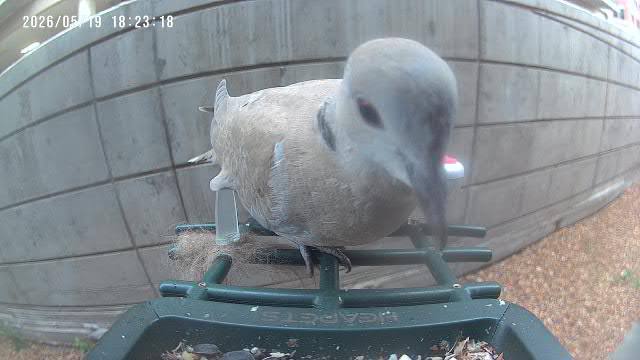
May 19, 2026 · found later in the photos
The first dove at the feeder — first filed as a mourning dove, until that half-collar gave it away as a collared-dove.