European Starling
Sturnus vulgaris
Oil-slick feathers and a story that runs back to Shakespeare.
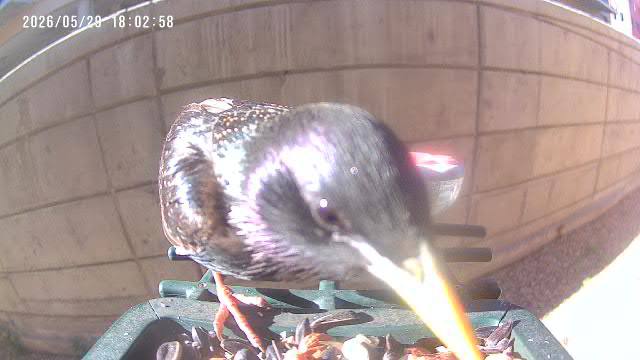
An oil-slick green-and-purple sheen over the head, back, and breast; a bright yellow pointed bill in spring (it goes dark in winter); and pale speckles — 'stars' — scattered across the back and wings, heaviest in fall and worn to a glossier finish by spring.
They're gifted mimics, copying other birds, car alarms, even a person's whistle — Mozart kept a pet starling that learned a phrase from one of his concertos, and mourned it when it died. In fall they gather in shape-shifting flocks of thousands called murmurations, each bird simply tracking its seven nearest neighbors. And the famous story: every starling in North America descends from about a hundred birds released in New York's Central Park in 1890, by a man who wanted every bird Shakespeare ever mentioned to live here.
Not everyone's favorite — they're newcomers here, and they can be bullies at the nest box — but that oil-slick sheen is hard to argue with. Introduced to New York in the 1890s; now coast to coast.
-
May 29, 2026
Dropped by in full spring colors.